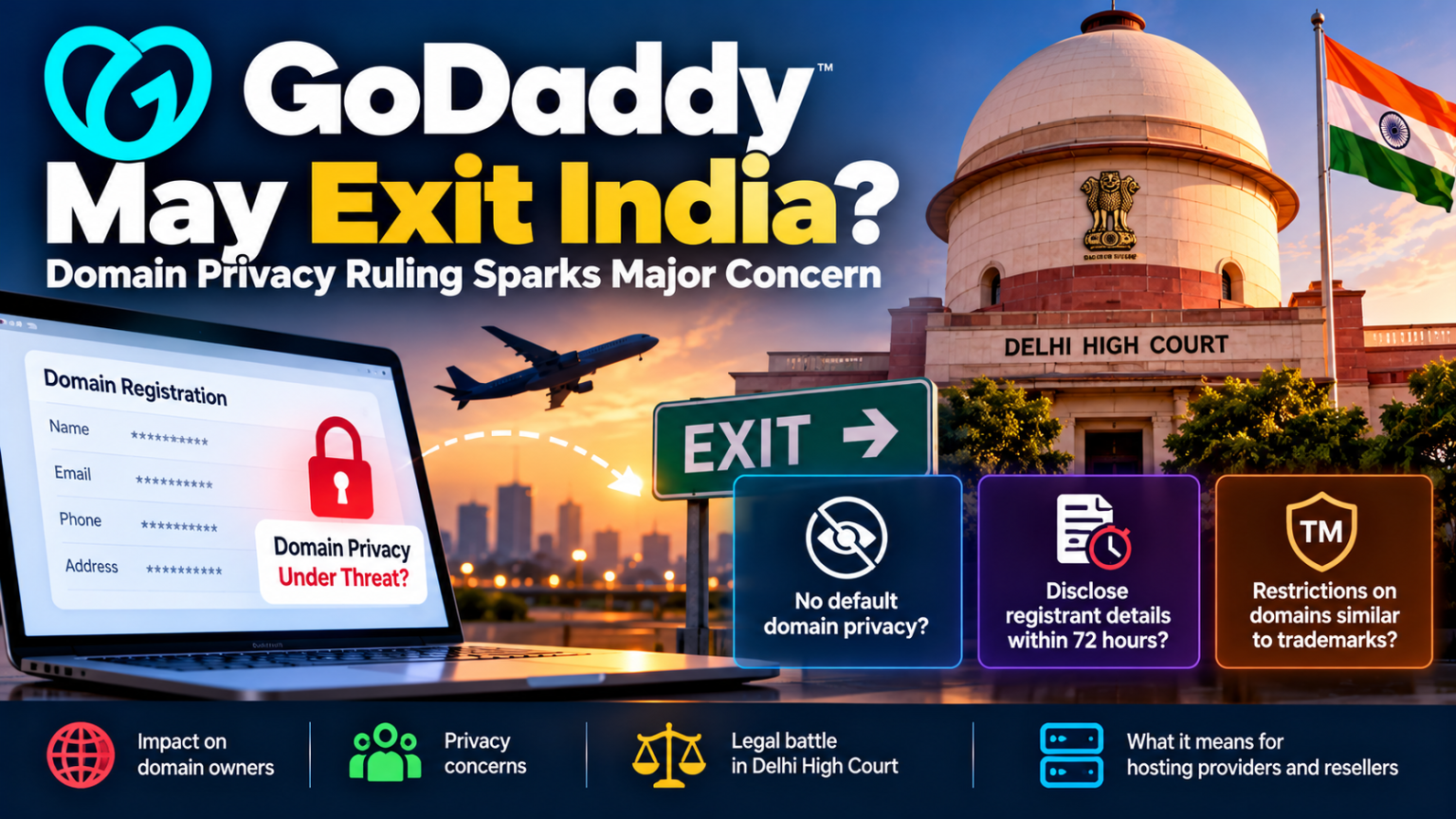
GoDaddy Warns It May Exit India Over a Domain-Privacy Ruling
GoDaddy, one of the world’s largest domain registrars, has warned that it may be forced to leave India if a Delhi High Court ruling imposing new requirements on domain registrations is not overturned. The dispute centres on how domain registrars should fight fake websites while protecting the personal information of legitimate website owners.
The case could have consequences for India’s domain registration market, web hosting businesses, domain resellers and millions of people who own websites.
According to a Reuters report published on July 3, 2026, GoDaddy has challenged the court’s directions, arguing that they could create privacy risks and complications for the global domain name system.
What triggered the dispute?
The dispute follows a series of legal cases brought by major companies against websites allegedly impersonating their brands or misleading customers. Businesses including Amazon, McDonald’s, Microsoft and other well-known brands have sought action against fraudulent websites.
In December 2025, the Delhi High Court ordered the blocking of more than 1,100 websites in the relevant litigation and introduced broader directions for domain registrars.
The objective was to make it harder for fraudsters to register deceptive domain names and operate websites that misuse established brands. However, the additional requirements have raised questions about privacy, trademark protection and how registrars can comply with different legal obligations.
Three major requirements under challenge
The court’s directions identified in reporting on the case include three significant changes for domain registrars.
1. Changes to default domain privacy
Domain privacy services help prevent a registrant’s personal contact information from being openly displayed in public registration records.
The ruling directed registrars to stop providing privacy protection by default. GoDaddy argues that removing this protection could expose legitimate customers’ names, addresses, telephone numbers and email addresses, potentially increasing their risk of harassment, stalking and targeted phishing.
2. Disclosure of registrant details within 72 hours
The directions also require domain registration details to be disclosed within 72 hours to parties claiming a legitimate interest.
GoDaddy has questioned how registrars can reliably determine who qualifies as having such an interest and whether the requested information should be disclosed. The company argues that a short deadline and unclear criteria could create operational and legal difficulties.
3. Restrictions on domains resembling trademarks
The court also directed registrars to prevent registrations involving variations of protected brand names.
While this approach aims to limit cybersquatting and impersonation, GoDaddy has raised concerns about how broadly such restrictions might apply. Some names resemble trademarks but may also be legitimate surnames, ordinary words or names used by unrelated businesses.
The challenge is how to protect trademark owners without unnecessarily restricting legitimate domain registrations.
Why is GoDaddy warning about leaving India?
GoDaddy’s central concern is that domain names operate through a global system. A website address does not become a separate internet identity simply because it was registered through a particular country’s registrar.
The company argues that complying with India’s requirements could force it to change privacy and registration practices in ways that affect customers beyond India.
GoDaddy described the measures in its appeal as potentially commercially destabilising and warned that domain companies could be compelled to exit the Indian market.
The stakes are significant for the company. Reuters reported that GoDaddy manages approximately 80 million domains worldwide and serves more than 20 million users. India has also been described by company executives as its largest emerging-market region.
Other registrars, including Namecheap and Hosting Concepts, have challenged aspects of the ruling as well.
What does this mean for Indian website owners?
For customers, the most immediate concern is domain privacy. If privacy protections become less readily available, individuals and businesses may have to consider how much of their registration information can be accessed and under what circumstances.
Potentially affected groups include:
- Small businesses registering domains for their websites.
- Freelancers and independent professionals.
- Bloggers, journalists and content creators.
- Hosting companies and domain resellers managing customer registrations.
- Businesses using domains that contain common words or names similar to established trademarks.
Hosting providers and resellers should monitor the legal developments, review their registration and privacy policies, and keep customer contact information accurate. They should also avoid assuming that a possible GoDaddy exit means customers must immediately transfer their domains.
There is no basis to treat GoDaddy’s warning as confirmation that it has already decided to leave India. Any actual change to its operations or customer services would need to be confirmed by the company.
The legal case remains important
GoDaddy’s appeal raises a difficult question: how can India tackle fraudulent websites while preserving legitimate registrants’ privacy and maintaining a consistent global domain registration system?
The December 2025 judgment sought to strengthen protection against brand impersonation. The registrars’ challenge argues that some of the broader requirements could expose innocent users and create compliance problems.
A Delhi High Court order dated August 12, 2026, listed GoDaddy’s appeal for a further hearing on September 1. A subsequent order dated September 1 re-notified the matter for October 1. I could not verify a final ruling as of October 11, 2026, so the outcome should not be assumed.
The latest court developments can be checked through the Delhi High Court and the published GoDaddy case record.
Conclusion
GoDaddy’s warning highlights the tension between combating online fraud and protecting the privacy of legitimate domain owners. The case could influence how registrars handle personal data, trademark-related registrations and requests for customer information in India.
For web hosting companies, domain resellers and website owners, the practical step is to follow the court proceedings and official registrar announcements rather than make changes based on speculation.
The eventual outcome will help determine how India balances stronger action against fraudulent websites with privacy safeguards and the practical realities of operating a global domain name system.